
When a person dies without a will and without a spouse, children, parents, siblings, nieces or nephews, the estate passes to cousins. But a cousin does not simply receive a check. The cousin has to prove the relationship to the Surrogate’s Court in a kinship proceeding before the estate can be distributed. We represent cousins in those proceedings in the Surrogate’s Courts of New York, Kings, Queens, Bronx, Richmond, Nassau, Suffolk and Westchester counties.
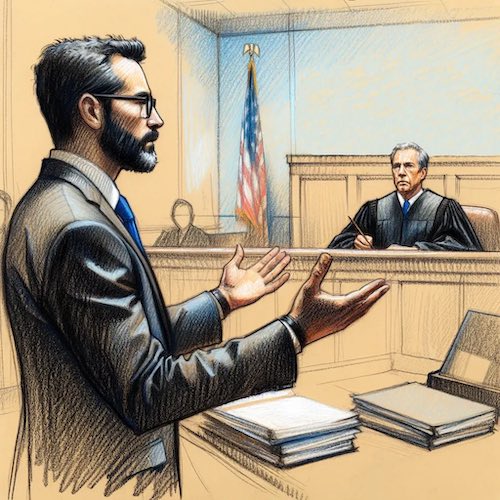
The work has two halves. First, the court must be satisfied, by documents and by testimony, that you are related to the decedent in the way you say, and that there is no closer relative who would take ahead of you. Second, once the court issues a decree of kinship, the estate is distributed to the people the decree names. We handle both halves, and we explain each step in plain language as it comes.
What We Do
An inheritance can only be paid out after the court has verified who the eligible heirs are. The court does not take a cousin’s word for it. Our job is to assemble the proof, present it, and deal with whatever comes up along the way.
-
Gathering the evidence with a genealogist
We work with the family and with a professional genealogist to collect the documents that establish each link in the family tree: birth, death and marriage certificates, obituaries, probate records, census entries and similar records. We guide the genealogist through what the court expects and help put together the genealogist’s affidavit and the family tree with its exhibits. Our firm has handled these cases since 2008, so we know what evidence the Surrogate’s Court accepts and how it wants the evidence presented.
-
Due diligence on other possible heirs
The court will not conclude the proceeding until a diligent search has been made for every other person who might be an heir. We track down and contact potential cousin heirs of the decedent and document the search, because the court needs to be able to close the class of distributees with confidence.
-
Preparing and filing the submission
We organize the collected documents into a submission that proves your relationship to the decedent and file it with the Surrogate’s Court. Deadlines are tracked and the paperwork is checked so that the petition is not sent back for a missing certificate or an unexplained gap in the tree.
-
Witnesses and the kinship hearing
The court requires testimony from a disinterested person and from a person with knowledge of the family. We advise the cousins on who qualifies, choose the best witnesses, and prepare them. At the hearing the court hears from the cousins themselves, the disinterested witnesses, and the genealogist. We prepare for each hearing and appear on your behalf.
-
Resolving disputes and distributing the estate
Issues come up in almost every kinship case: a competing claimant, a document that cannot be found, a question about whether a closer relative survived the decedent. We help you resolve them or, where they cannot be resolved by agreement, argue them before the court. Once the court declares who the rightful heirs are, we assist with the distribution so that you receive your full share.
Why Cousins Choose Us as Their Kinship Attorneys
Kinship proceedings are a large part of what we do, and repeated exposure matters. We have seen most of the scenarios that arise, and the judges and court staff in the New York City and suburban Surrogate’s Courts are familiar with our filings. That tends to shorten the timeline.
Our fees are hourly and are not a percentage of the inheritance. As a small firm, the attorney handling your case is the one who explains the process to you, answers your questions, and appears in court. We handle the communications with the court, the genealogist and the other parties so that you do not have to manage the process yourself, and we watch the filing deadlines and the documentation so that the case is not delayed by avoidable mistakes.
Losing a cousin who died without a will can be hard enough without a court process on top of it. If you believe you may be an heir of a cousin’s estate, or if you have been notified of a kinship proceeding and want to know where you stand, call us at 212-233-1233 or email [email protected] for an assessment of your case.