







Mr. Goodwin is everything you want in an attorney: professional, honest, thorough, and genuinely caring. He always explains things clearly, so I understood exactly what was happening and what to expect next. His attention to detail and persistence really stood out. Looking back, I feel lucky to have found him. He guided me through the whole process expertly, and I deeply appreciate all his hard work. Would definitely recommend him to anyone needing legal help.
Call Today:
212-233-1233
Family Tree Affidavit in New York City
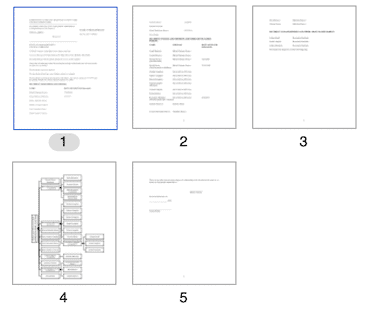
Under NYCRR 207.16, a family tree affidavit is required in a New York petition for probate when the decedent was survived by no relatives, by one relative, or where the relatives’ relationship to the decedent is grandparents, aunts, uncles or first cousins. It should not be confused with the small estate affidavit required under SCPA 1310.
The family tree affidavit is sworn by a disinterested person and, unless the distributee is the spouse or only child of the decedent, must include a family tree. The affidavit states how and for how long the affiant knew the decedent and the decedent’s family, the affiant’s relationship to the decedent, who the decedent’s distributees are, and that no other persons of the same or a nearer degree of relationship survived the decedent. It is executed under penalty of perjury.
The affidavit is not conclusive evidence of who the heirs are and may be rebutted. An heir who was left out can contest it by filing a correction affidavit in the same probate proceeding together with evidence of his or her relationship to the decedent, such as a birth certificate.
The Text of Section 207.16
The rule states, in the relevant subdivisions:
(b) Whenever, in a petition for probate or administration, a party upon whom the service of process is required is a distributee whose relationship to decedent is derived through another person who is deceased, the petition must either: (1) show the relationship of the distributee to decedent and the name and relationship of each person through whom such distributee claims to be related to decedent; or (2) have annexed a family tree table or diagram showing the name, relationship and date of death of each person through whom such distributee claims to be related to the decedent, which table or diagram shall be supported by an affidavit of a person having knowledge of the contents thereof.
(c) If the petitioner alleges that the decedent was survived by no distributee or only one distributee, or where the relationship of distributees to the decedent is grandparents, aunts, uncles, first cousins or first cousins once removed, proof must be submitted to establish: (1) how each such distributee is related to the decedent; and (2) that no other persons of the same or a nearer degree of relationship survived the decedent. Unless otherwise allowed by the court, the proof submitted pursuant to this subdivision must be by an affidavit or testimony of a disinterested person. Unless otherwise allowed by the court, if only one distributee survived the decedent, proof may not be given by the spouse or children of the distributee. The proof shall include as an exhibit a family tree, table or diagram, except no such table or diagram shall be required if the distributee is the spouse or only child of the decedent.
Why the Affidavit Matters
In an estate that passes to distant relatives, the family tree affidavit is one of the most important documents in the file. When the decedent left no spouse, children or parents, the heirs are siblings, nieces and nephews or cousins, and the court needs to know who they are. The petitioner must prove not only that the proposed heirs are related to the decedent in the way claimed but that no closer relatives exist who would inherit ahead of them. The affidavit also serves due process, because it is how every interested party gets identified and given notice of the proceeding, and a complete affidavit made under penalty of perjury creates the record that supports the eventual decree of distribution and protects against later claims.
Who Can Sign It
The affiant must be a “disinterested person,” meaning someone with no financial interest in the estate: not a distributee, not a beneficiary, not a creditor, and not anyone whose share would change based on what the affidavit says. The affiant must also have personal knowledge of the family. The classic affiant is a long-time friend or non-relative neighbor who knew the decedent for decades and is familiar with the family, but relatives by marriage who are not blood relatives (the spouse’s family, for example), members of the decedent’s religious community, former co-workers of long acquaintance and old family friends can all qualify. The affidavit sets out the basis of the affiant’s knowledge: how long the affiant knew the decedent, the nature of the relationship, and the family events the affiant attended or witnessed.
What the Affidavit Contains
A complete family tree affidavit gives the affiant’s name, address and biographical information; the affiant’s relationship to the decedent (friend, neighbor and so on) and how long it lasted; a statement that the affiant has no financial interest in the estate; and a description of the affiant’s familiarity with the decedent’s family. It then identifies the decedent’s parents, grandparents and other relevant ancestors, lists the decedent’s siblings with their dates of birth and, where applicable, death, and for each deceased sibling lists that sibling’s children, the decedent’s nieces and nephews. It closes with the statement that no other persons of the same or a closer degree survived the decedent, attaches a family tree diagram showing the relationships visually, and bears the affiant’s notarized signature. For more distant relationships such as cousins and second cousins, the affidavit must trace the tree back to the common ancestor and document every link in the chain.
Supporting Documentation
Wherever possible the affidavit should be backed by documents, which make it more reliable and reduce the chance of objections during the kinship review.
| Document | What it establishes |
|---|---|
| Birth certificates | Parent-child relationships |
| Marriage certificates | Spousal relationships |
| Death certificates | The death of intermediate ancestors |
| Census records | Household composition |
| Obituaries | Surviving family members |
| Newspaper announcements | Births, marriages and deaths |
| Family bibles or photo albums | The family as recorded by its own members |
The Court’s Review
The Surrogate’s Court reads the affidavit critically, and especially so where the proposed distributees are distant relatives such as cousins or second cousins, where the estate is substantial, where the family came from countries with disrupted historical records, where the family has been geographically dispersed for generations, or where remarriages and step-relationships could affect the analysis. The court may appoint a guardian ad litem to review the genealogical record and report back. The guardian ad litem scrutinizes the affidavit, may demand additional supporting documentation, and recommends to the court whether the affidavit is sufficient.
If the Affidavit Is Insufficient
When the affidavit does not satisfy the court, the proceeding may shift to a formal kinship hearing. That means live testimony from the affiant and other witnesses, cross-examination by the guardian ad litem and other interested parties, detailed documentary evidence including all available records, genealogical research by an heir search firm where needed, and DNA evidence in appropriate cases. A kinship hearing is time-consuming and expensive, but it produces the strongest possible record for the eventual decree.
Practical Advice for Petitioners
Start gathering documents early, because birth and death certificates from other states or countries can take weeks or months to arrive. Interview elderly family members while they are still available; their memories often fill gaps the documents cannot. In a difficult case, a professional genealogist is often worth the cost for the certainty it buys. Be thorough about identifying every potential heir, since a missed distant cousin can invalidate the proceeding later. And work with counsel so the affidavit meets the specific court’s requirements the first time.
If you need to prepare a family tree affidavit, or you are an heir who was left out of one, call us at 212-233-1233 or email [email protected].

About the Author
Albert Goodwin Esq. is a licensed New York attorney with over 18 years of courtroom experience. His extensive knowledge and experience make him well-qualified to write authoritative articles on a wide range of legal topics. He can be reached at 212-233-1233 or [email protected].