







Mr. Goodwin is everything you want in an attorney: professional, honest, thorough, and genuinely caring. He always explains things clearly, so I understood exactly what was happening and what to expect next. His attention to detail and persistence really stood out. Looking back, I feel lucky to have found him. He guided me through the whole process expertly, and I deeply appreciate all his hard work. Would definitely recommend him to anyone needing legal help.
Call Today:
212-233-1233
New York Health Care Proxy: How to Appoint a Health Care Agent
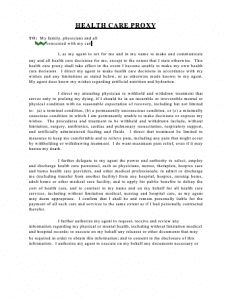
A New York health care proxy is one of the most important, and most frequently misunderstood, documents in an estate plan. In our practice we see two recurring problems: clients who never sign one and leave their family scrambling in a crisis, and clients who signed one years ago that no longer reflects their wishes, names an agent who has died, or lacks the HIPAA language hospitals now expect. This page explains how the proxy works under New York law, the drafting mistakes we see most often, and how the proxy fits with living wills, MOLST forms and Article 81 guardianship. For a broader overview of all advance planning tools, see our New York advance directive guide. This page focuses on the proxy itself: choosing and empowering an agent to make medical decisions for you.
What a New York Health Care Proxy Actually Does
A health care proxy lets a competent adult (the “principal”) appoint a trusted person (the “agent”) to make health care decisions if the principal later loses the capacity to make them personally. In other states the document is often called a “health care power of attorney.” In New York the proxy is governed by Article 29-C of the Public Health Law (§§ 2980–2994), and the standard form published by the New York State Department of Health is accepted by hospitals and providers across the state.
The proxy is narrow and powerful at the same time. It does not cover financial matters; that is the job of a financial power of attorney, a different document under the General Obligations Law. It covers only health care: consenting to or refusing treatment, choosing facilities, deciding about life-sustaining treatment, and similar medical questions. The decisions an agent most often faces are whether to start, continue or stop life support during a coma or terminal condition, whether to provide or withhold artificial nutrition and hydration, choices among treatment options or care facilities, and, where authorized, organ and tissue donation.
One New York wrinkle deserves emphasis. An agent’s authority to decide about artificial nutrition and hydration is limited unless the principal’s wishes on that subject are reasonably known. We therefore recommend that the proxy expressly state whether the agent knows your wishes on this point; otherwise providers may default to providing nutrition and hydration regardless of what the agent says.
Who Can and Cannot Serve as Your Agent
You can name almost any competent adult you trust: a spouse or domestic partner, an adult child, a parent or sibling, a close friend, or your attorney. You cannot name your attending physician, and operators or employees of a hospital, nursing home or mental hygiene facility where you are a patient generally cannot serve unless they are related to you. New York lets you name a successor agent who acts if your first choice is unavailable, unwilling or unable to serve. But only one agent may act at a time. New York does not allow co-agents who act jointly, which is a frequent point of confusion; if you want a second person involved, name that person as a successor, not a co-agent.
When the Agent’s Authority Springs Into Effect
A health care proxy gives the agent no authority while you can still make your own decisions. The agent’s authority becomes active only when the attending practitioner determines, to a reasonable degree of medical certainty, that you lack capacity to make health care decisions. Under Article 29-C that determination must be made by the attending practitioner (the physician, or in some cases the nurse practitioner or physician assistant, primarily responsible for your care), must be in writing and entered in your medical record, and must state the cause, nature and expected duration of the incapacity. For decisions to withhold or withdraw life-sustaining treatment, a second clinician must independently confirm the incapacity determination, a safeguard that exists because those decisions are irreversible. If you regain capacity, even temporarily during a lucid interval, your own decisions control again and the agent steps back.
The Standard Your Agent Must Follow
Your agent is not free to decide on personal preference. The law requires the agent to follow your wishes if they are known, and only where your wishes are unknown to act in your best interests. Courts and providers look for your wishes in the instructions written into the proxy itself, in other documents you signed (a living will, a MOLST or a values statement), in statements you made to the agent or others, in your known religious or cultural values, and in your prior medical decisions in similar situations. That is why the form alone is rarely enough. The most useful thing you can give your agent is a frank conversation about what matters to you, backed by written instructions, so the agent is never left guessing under pressure.
Drafting Mistakes We See Most Often in New York Proxies
Over years of preparing and reviewing these documents, the same errors come up again and again.
| Mistake | Consequence |
|---|---|
| No HIPAA authorization. | Many older proxies give the agent authority to decide but no clear right to see medical records. Under federal HIPAA rules, an agent who cannot see the chart cannot make an informed decision. A properly drafted proxy includes HIPAA-release language naming the agent (and often others) as authorized to receive protected health information. |
| Silence on artificial nutrition and hydration. | New York limits the agent’s authority on this point unless your wishes are reasonably known. Leaving the form blank here can produce exactly the outcome the family hoped to avoid. |
| A single agent with no successor. | If your one named agent dies first, moves away or cannot be reached, the proxy is effectively useless and your family falls back on the default surrogate rules. |
| Trying to name co-agents. | New York does not allow two agents acting together. Attempts to do so create ambiguity that hospitals dislike. |
| Witness defects. | The proxy must be signed in the presence of two adult witnesses, and the person you name as agent cannot be one of them. We have seen documents rejected for this reason. |
| Stale documents after divorce. | A divorce or legal separation automatically revokes the appointment of a former spouse as agent. If you intend a former spouse to keep serving, you must re-sign or add a written statement; if you do not, make sure a new agent is named so there is no gap. |
Practical Scenarios From a New York Estate Practice
Family disagreement. A validly appointed agent’s decision is binding even when other relatives object. Disgruntled family members can petition a court, but New York courts generally defer to the named agent unless there is clear evidence the agent is ignoring the principal’s known wishes or acting against the principal’s interests. A clearly drafted proxy with written instructions greatly reduces the chance of a courtroom fight.
The adult child living out of state. Naming a child who lives across the country as your only agent can cause serious delays. We often suggest a local successor agent who can be physically present quickly in an emergency.
Religious and cultural directions. Clients with strong religious convictions, whether Catholic, Orthodox Jewish, Jehovah’s Witness or other, frequently want specific limits on treatment. New York lets you build those instructions into the proxy or a companion document so the agent is bound to honor them.
The temporarily lucid patient. Capacity can fluctuate. When a patient regains capacity during an illness, the patient’s own decisions override the agent’s, which requires careful coordination with the treatment team. Documenting wishes in advance smooths these transitions.
How the Proxy Fits With Living Wills and MOLST
People often confuse these documents. They are not interchangeable.
| Document | Question it answers |
|---|---|
| Health care proxy | Who decides? |
| Living will | What do I want? It states treatment preferences in advance. |
| MOLST (Medical Orders for Life-Sustaining Treatment) | Converts those preferences into actual physician orders that follow you across care settings. |
The MOLST is for people who already have a serious illness. It is signed by a physician after discussion with the patient or, if the patient lacks capacity, with the proxy agent. The proxy designates the decision-maker; the MOLST records the binding orders. Where the documents seem to conflict they should be read together: generally the proxy controls who decides, while the living will and MOLST inform what is decided. We recommend reviewing all of them together whenever a health condition changes.
If You Have No Proxy: The Family Health Care Decisions Act
If you never sign a proxy and lose capacity, New York’s Family Health Care Decisions Act (FHCDA), Public Health Law § 2994-a and following, supplies a default surrogate hierarchy: roughly, a court-appointed guardian, then a spouse or domestic partner, an adult child, a parent, an adult sibling, and finally a close friend. The FHCDA fills a gap, but it is no substitute for choosing your own agent. The default surrogate may not be the person you would have picked, the statute constrains how that surrogate may act, and disputes over who has priority can stall urgent decisions.
How the Proxy Interacts With Article 81 Guardianship
A well-drafted health care proxy can help your family avoid a guardianship proceeding altogether. If you have appointed an agent, a court is far less likely to need to appoint a guardian under Mental Hygiene Law Article 81 to make medical decisions for you. New York courts are directed to use the least restrictive intervention, and an existing, valid proxy is strong evidence that a guardian is unnecessary for health care purposes. Where a guardianship does occur, the court can, and often does, leave a properly functioning health care agent in place. That is one more reason to sign a proxy well before any crisis. If a court does become involved, see our pages on disputes over a fiduciary’s authority and on an agent abusing their authority.
Keeping and Updating Your Proxy
You can change your agent at any time simply by signing a new proxy; the old one is revoked. Otherwise the proxy stays in effect until you revoke it or, if you chose one, until an expiration date you wrote in. Give signed copies to your agent, your successor agent and your primary physician, keep a wallet card noting where the proxy is stored and who your agent is, and re-read the document after major life events such as marriage, divorce, the death of an agent, a serious diagnosis or a move.
A Simple Checklist Before You Sign
| Check | Why it matters |
|---|---|
| Have you named a first agent and at least one successor? | A single agent who is unavailable leaves your family with the default surrogate rules. |
| Does the form include HIPAA authorization? | Without it the agent may be unable to see your records. |
| Have you addressed artificial nutrition and hydration? | The agent’s authority on this point depends on your wishes being known. |
| Are your two witnesses adults who are not your agent? | A defective witnessing can get the document rejected. |
| Have you stated any religious or treatment limits you care about? | Instructions in the document bind the agent. |
| Have you actually talked with your agent about your wishes? | Known wishes are the standard the agent must follow. |
| Do your living will and MOLST, if any, say something consistent with your proxy? | Conflicting documents invite disputes at the bedside. |
Frequently Asked Questions
Is a New York health care proxy the same as a power of attorney? No. A health care proxy covers medical decisions under Public Health Law Article 29-C. A power of attorney covers financial and property decisions under the General Obligations Law. Most people need both.
Do I need a lawyer or a notary to sign one? New York does not require a notary. You need two adult witnesses, and your agent cannot be one of them. A lawyer is not legally required, but proper drafting avoids the gaps described above.
Can I name more than one agent? You may name a successor agent who serves if the first cannot, but New York does not permit co-agents acting at the same time.
What happens to my proxy if I divorce? A divorce or legal separation automatically revokes your former spouse’s appointment unless you re-affirm it in writing or sign a new proxy.
What if I never signed a proxy? The Family Health Care Decisions Act supplies a default surrogate hierarchy, but the decision-maker may not be who you would have chosen, which is why a signed proxy is preferable.
Speak With a New York Health Care Proxy Attorney
A health care proxy is a short document with long consequences. Getting the details right, meaning successor agents, HIPAA language, nutrition-and-hydration instructions and coordination with your other planning documents, is the difference between a proxy that works in a crisis and one that creates confusion. If you would like help preparing or reviewing a New York health care proxy, call the Law Offices of Albert Goodwin at 212-233-1233 or write to [email protected]. You can also read more about Albert Goodwin and our New York estate planning practice.

About the Author
Albert Goodwin Esq. is a licensed New York attorney with over 18 years of courtroom experience. His extensive knowledge and experience make him well-qualified to write authoritative articles on a wide range of legal topics. He can be reached at 212-233-1233 or [email protected].