







Mr. Goodwin is everything you want in an attorney: professional, honest, thorough, and genuinely caring. He always explains things clearly, so I understood exactly what was happening and what to expect next. His attention to detail and persistence really stood out. Looking back, I feel lucky to have found him. He guided me through the whole process expertly, and I deeply appreciate all his hard work. Would definitely recommend him to anyone needing legal help.
Call Today:
212-233-1233
Affidavit of Heir Under NYCRR 207.16: Drafting It and When New York Surrogate's Court Requires It
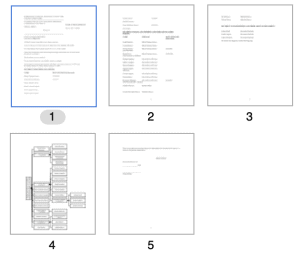
This page focuses narrowly on the procedural rule that compels an affidavit of heir in a New York Surrogate's Court proceeding, Uniform Rules for Surrogate's Court § 207.16 (22 NYCRR 207.16), and on how the document is actually drafted and tested in practice. If you are looking for a broader, plain-English overview of what the document is and who can sign it, see our companion page on the affidavit of heirship. Here, the emphasis is on the triggering conditions of the rule, worked kinship scenarios, and what happens when the court is not satisfied.
What Rule 207.16 Actually Requires
Rather than reproducing the regulation verbatim (the full text is published by the New York courts at 22 NYCRR 207.16), here is the practical substance of what the rule demands in a petition for probate or administration:
- Derivative distributees (207.16[b]): When a person entitled to service of process is related to the decedent through someone who has died (for example, a niece who inherits in place of her deceased parent, the decedent's sibling), the petition must either explain that chain of relationships in the petition itself or attach a family tree supported by an affidavit of someone with knowledge of its contents.
- Sparse or distant relatives (207.16[c]): When the petitioner alleges the decedent left no distributee, only one distributee, or distributees who are only grandparents, aunts, uncles, first cousins, or first cousins once removed, the petitioner must prove how each distributee is related and that no person of the same or nearer degree survived. That proof must generally come from a disinterested person, and a family tree must be annexed — except where the sole distributee is the spouse or only child of the decedent.
The rule must be read together with the intestacy hierarchy of EPTL 4-1.1, which determines who counts as a closer relative. New York intestacy does not pass to relatives more remote than great-grandchildren of grandparents (EPTL 4-1.1[a][7]), which is why first cousins once removed are typically the outer boundary of who can inherit — and why § 207.16 singles out exactly those classes for heightened proof.
This Is Not the Small-Estate Affidavit
The affidavit of heir under § 207.16 should not be confused with the affidavit used to collect certain amounts without administration under SCPA 1310 or the voluntary administration (small estate) procedure under SCPA Article 13. The 207.16 affidavit is a proof-of-kinship document filed inside a regular probate or administration proceeding; it does not, by itself, transfer assets or shrink the estate.
A Worked First-Cousin Example
Consider a decedent who dies a New York domiciliary, unmarried, with no children, no surviving parents, and no siblings or their issue. Under EPTL 4-1.1, the estate then passes to grandparents or, if none survive, to the issue of grandparents — meaning aunts, uncles, and first cousins. Suppose the only living relatives are three first cousins on the maternal side.
Because the relationship falls squarely within § 207.16(c), the petitioner (often one of the cousins, who would seek letters of administration) cannot simply assert kinship. The petition must be supported by:
- A family tree tracing from the decedent up to the common ancestor — here, the maternal grandparents — and back down to each surviving cousin;
- An affidavit of a disinterested person attesting to the family structure and stating that no closer relative (no surviving paternal-side aunts, uncles, or first cousins, and no closer maternal relatives) survived; and
- Documentary proof — birth, marriage, and death certificates linking each generation.
If the paternal side of the family is undocumented or the affiant cannot speak to it, the court will not simply take the maternal cousins' word for it. That is the most common point at which a routine administration turns into a contested or scrutinized kinship matter. For more on that proceeding, see our overview of the administration of an estate without a will.
Who Qualifies as a Disinterested Person
The affiant must have no financial stake in the estate and must have genuine, longstanding knowledge of the family — not a casual acquaintance. In practice, courts accept affidavits from:
- Long-time friends or neighbors who knew the decedent and the family over decades;
- Members of the same religious congregation familiar with family events;
- Former co-workers with sustained personal acquaintance;
- In-laws of distant relatives who have no inheritance interest of their own.
Where only one distributee survives, § 207.16(c) expressly bars the proof from coming from that distributee's spouse or children, because those persons have an indirect interest. The affidavit must explain how and how long the affiant knew the decedent, the basis of the affiant's knowledge of the family, who the distributees are, and that no person of the same or nearer degree survived. It is sworn under penalty of perjury.
Building the Family Tree the Court Will Accept
A family tree under § 207.16 should trace the relationship from the decedent back to the common ancestor and forward to each claimed distributee. For first-cousin cases, that means starting at the decedent's grandparents and accounting for all of their descendants. A usable tree includes:
- Full names, including maiden names;
- Dates of birth and death where known;
- All marriages, including prior and subsequent ones;
- All children of each marriage — non-marital children (subject to EPTL 4-1.2) and adopted children (treated as natural children under Domestic Relations Law § 117) included;
- An indication of who is living and, for those who have died, whether they left surviving issue.
Diagrams supplement the written narrative; many practitioners pair a narrative affidavit with a visual chart so a clerk or the court can follow the lineage at a glance.
Supporting Documentation
The stronger the documentary record, the less likely the court is to escalate. Useful records include birth, marriage, and death certificates; census records showing household composition over time; immigration and naturalization records for foreign-born ancestors; obituaries listing survivors; religious records (baptismal, marriage, burial); and family bibles or photographs. Where records are missing because of immigration, war, or destroyed archives, an heir-search or forensic genealogy firm can often assemble proof an individual could not locate alone.
The "No Others" Statement — the Heart of the Affidavit
The single most important assertion in the affidavit is that no person of the same or a nearer degree of relationship survived the decedent. This is what protects the estate from being distributed to a cousin while a closer relative is overlooked. The affiant should be ready to explain the basis for that conclusion — personal familiarity across all branches of the family, review of family records, consultation with other relatives, and a diligent search for any closer kin. A bare "I know of no others" carries far less weight than a specific account of the inquiry actually made.
How the Surrogate's Court Reviews the Affidavit
The Surrogate's Court treats kinship proof more critically as the relationship becomes more remote and as the estate grows larger. Depending on the file, the court may accept the affidavit as filed, request additional affidavits, appoint a guardian ad litem to investigate, or set the matter down for a kinship hearing under SCPA 2225, at which witnesses testify and documents are admitted. New York case law reflects how demanding that proof can be: in Matter of Whelan, 93 A.D.2d 891 (2d Dep't 1983), the court highlighted that a claimant must prove kinship and the absence of nearer kin by a fair preponderance of the evidence; the burden does not shift simply because no contest appears on the surface.
County practice varies in tempo. New York County (Manhattan) and Kings County (Brooklyn) Surrogate's Courts handle high volumes and frequently involve the court's law department or a guardian ad litem in distant-relative matters; smaller counties may resolve well-documented affidavits more quickly. Either way, expect added time and cost when the family record is thin.
The Guardian ad Litem's Role
In distant-relative cases, the court often appoints a guardian ad litem (GAL), usually an attorney, to represent the interests of any unknown heirs. The GAL independently reviews the family tree and documents, looks for gaps or inconsistencies, may interview the affiant, and reports to the court with recommendations. SCPA 2225 also allows the court, after diligent search, to find that no other distributees exist (or that their whereabouts are unknown), permitting distribution while protecting any later-appearing heir. The GAL's fee is paid from the estate.
The Affidavit Is Rebuttable
An affidavit of heir is not conclusive proof of who the heirs are. An omitted heir may file a correction or competing affidavit in the same proceeding, supported by evidence (such as a birth certificate), to establish a closer relationship. If a nearer relative appears, distributions can be challenged, a fiduciary who paid out funds may face a surcharge, recipients may have to return what they received, and an affiant who swore falsely faces perjury exposure under oath. These risks are exactly why the affidavit warrants careful preparation rather than a fill-in-the-blank approach.
Related Reading
- Affidavit of heirship — what it is and who signs it
- Letters of administration when there is no will
- A sample NYC probate timeline
- Becoming administrator of an estate without a will
Speak With a New York Estate Attorney
Drafting an affidavit of heir that will satisfy § 207.16, and avoid an avoidable kinship hearing, is best done with counsel familiar with the practice of the particular Surrogate's Court. At the Law Offices of Albert Goodwin, with offices in New York City, Brooklyn, and Queens, we prepare and litigate kinship proof in New York estate matters. You can call us at 212-233-1233 or email [email protected].
This article is general information about New York Surrogate's Court practice and is not legal advice. Statutes and court rules change; consult a licensed New York attorney about your specific situation.

About the Author
Albert Goodwin Esq. is a licensed New York attorney with over 18 years of courtroom experience. His extensive knowledge and experience make him well-qualified to write authoritative articles on a wide range of legal topics. He can be reached at 212-233-1233 or [email protected].