







Mr. Goodwin is everything you want in an attorney: professional, honest, thorough, and genuinely caring. He always explains things clearly, so I understood exactly what was happening and what to expect next. His attention to detail and persistence really stood out. Looking back, I feel lucky to have found him. He guided me through the whole process expertly, and I deeply appreciate all his hard work. Would definitely recommend him to anyone needing legal help.
Call Today:
212-233-1233
Can You Empty a House Before Probate in New York? Removing Belongings vs. Transferring Title
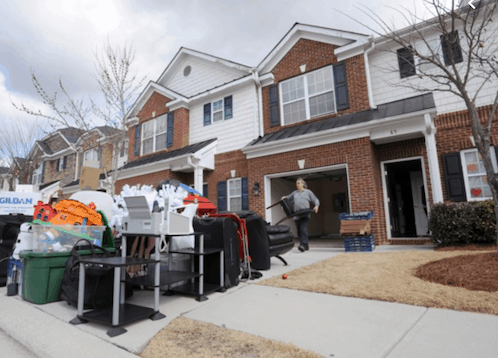
One of the most common questions families ask after a loved one dies in New York is whether they can go into the house and start clearing out the contents, the furniture, jewelry, cash, collectibles, documents and personal effects, before probate is complete. The short, accurate answer is: generally, no, you should not empty a deceased person’s house before someone is legally appointed to act for the estate. Doing so can expose you to serious civil and even criminal consequences under New York law.
This page focuses on the question people actually mean: removing the belongings inside the home. That is a different legal question from whether the house itself passes through probate. Both are addressed below, because confusing the two leads people into trouble.
Removing Belongings vs. Transferring the House: Two Different Questions
Emptying the house means removing the decedent’s tangible personal property: contents, valuables and effects. Under New York law that is part of administering the estate, and only a court-appointed fiduciary, an executor or administrator, generally has the authority to handle, distribute or dispose of those assets. Transferring the house means changing the title to the real property. Whether the real estate passes through probate depends entirely on how title was held at death, not on what is inside the house.
You can therefore have a house that passes outside probate, for example because it was held in joint tenancy with right of survivorship, while the valuable contents inside still belong to the estate and require a fiduciary to distribute them properly. Owning the building does not automatically entitle you to keep everything inside it.
Who Has Authority to Act in New York
In New York, the Surrogate’s Court appoints a fiduciary before estate assets can lawfully be administered. An executor is named in a will and appointed when the court issues Letters Testamentary after admitting the will to probate (SCPA Article 14). An administrator is appointed when there is no will, through an administration proceeding in which the court issues Letters of Administration (SCPA Article 10), with priority among distributees set by SCPA § 1001.
Until those letters are issued, no one, not even the person named in the will, has authority to start distributing or removing estate property. A nominated executor has no power to act before the will is admitted; their authority comes from the court, not the will itself.
Preliminary letters testamentary: a faster option
When probate will take time but the estate needs to be managed sooner, New York allows the nominated executor to apply for Preliminary Letters Testamentary under SCPA § 1412. These grant limited authority to begin securing and managing estate assets while the full probate proceeding is pending. This is often the proper, lawful route when a family feels pressure to act quickly, rather than emptying the house without authority. See our page on preliminary letters testamentary.
Small estates: voluntary administration under SCPA Article 13
If the decedent’s personal property (excluding real estate) is worth $50,000 or less, New York offers a simplified procedure called voluntary administration under SCPA Article 13. A “voluntary administrator” files an affidavit with the Surrogate’s Court and receives a certificate authorizing them to collect and distribute the small estate. It is far cheaper and faster than full probate, but it still requires court paperwork before assets are handled.
When the House Itself Does Not Go Through Probate
The real property may pass outside probate depending on how title was held. If the decedent transferred the home into a properly funded revocable living trust during life, the trustee administers it under the trust’s terms, not through Surrogate’s Court. (A testamentary trust created in the will is different; it does pass through probate.) Property held in joint tenancy with right of survivorship, or as tenants by the entirety (available only to married couples in New York), passes automatically to the surviving co-owner by operation of law. The survivor records proof of death and continues to own the property without probate.
New York corrections on community property and TOD and lady bird deeds
Be careful with advice copied from other states. New York is not a community property state. It is an equitable distribution, separate property jurisdiction. There is no “community property” that automatically passes to a surviving spouse outside probate. (A surviving spouse does have a separate statutory right of election under EPTL § 5-1.1-A.)
New York only recently adopted a statutory transfer-on-death (TOD) deed for real estate. Real Property Law § 424, effective July 19, 2024, allows an owner to sign and record a TOD deed naming a beneficiary who takes title at death outside probate. A TOD deed signed before that date is not valid under the statute, and even a valid TOD deed passes only the real property, not the contents of the house. Do not rely on general TOD-deed advice from other states for New York real estate without confirming the current New York rules with an attorney.
“Lady bird” (enhanced life estate) deeds are not a recognized New York instrument. They are used in a handful of states; New York is not one of them. The old generic advice that a survivor can simply “empty the house” under community property or lady bird deeds does not fit New York, and even a valid New York TOD deed does not give the beneficiary authority over the belongings inside.
The Risks of Emptying a House Before Letters Are Issued
If a relative removes valuables before a fiduciary is appointed, or after appointment without authority, the consequences in New York can be significant.
| Risk | What it means |
|---|---|
| Conversion and civil liability | Taking estate property you are not entitled to is conversion. You can be sued and ordered to return the property or pay its value. |
| Discovery and turnover proceedings (SCPA §§ 2103 and 2104) | A fiduciary can bring a proceeding in Surrogate’s Court to compel a person believed to be withholding estate property to disclose what they took and turn it over. The court can issue inquiry orders and require testimony. |
| Surcharge | If a fiduciary mishandles or wrongfully takes assets, the court can hold them personally liable for the loss to the estate. |
| Removal of the fiduciary (SCPA § 711) | A fiduciary who misappropriates property can be removed for cause. |
| Criminal exposure | Depending on value and intent, taking a decedent’s property can amount to larceny under the New York Penal Law. |
The bottom line: even when you are an heir and feel entitled to a share, self-help, going in and clearing out belongings, is the wrong approach and can backfire badly, especially when there are co-heirs.
What You Can and Should Do Before Letters Are Issued
While you generally cannot distribute or remove belongings before appointment, there are practical, lawful steps.
- Secure the property. Lock the home, change locks if access by others creates risk, and prevent loss, theft or damage. Securing and preserving assets is appropriate and expected.
- Locate and safeguard the will and key documents. Find the original will, deeds, account statements and insurance policies. The original will must be filed with the Surrogate’s Court.
- Do not throw anything out or distribute it. Avoid disposing of contents, even if they seem worthless. Family disputes often erupt over discarded items.
- Document the contents. Photograph and inventory rooms, valuables, jewelry, cash and collectibles. A dated record protects everyone and supports the later estate inventory.
- Communicate with co-heirs. Keep beneficiaries and distributees informed. Transparency reduces the risk of accusations of hiding or taking property.
- Apply promptly for letters (or preliminary letters). The legitimate way to act quickly is to start the Surrogate’s Court proceeding, or seek preliminary letters, not to empty the house unilaterally.
- Handle perishables and basic maintenance. Continue utilities, secure pets, and address perishable food and obvious hazards. These caretaking acts are reasonable and distinct from distributing valuables.
After a Fiduciary Is Appointed
Once Letters Testamentary or Letters of Administration are issued, the executor or administrator can lawfully authorize beneficiaries to sort and collect items specifically bequeathed to them under the will, take possession of and inventory the remaining personal property, and sell, store or distribute the contents in accordance with the will or, in intestacy, the EPTL distribution rules (EPTL § 4-1.1). The fiduciary can also demand that an occupant who has no right to remain vacate the premises, and pursue eviction if necessary.
The fiduciary is answerable to all the beneficiaries for how the contents were handled. A beneficiary who asks is entitled to an accounting, and the court can require one, so the fiduciary should keep the inventory and a record of every item sold, stored or handed out.
Can Someone Living in the House Keep Living There?
As a practical matter, a person who already lived in the home before the death often continues to occupy it in the interim. But occupancy is not ownership and not a license to remove valuables. Once a fiduciary is appointed, that fiduciary can require the occupant to vacate where appropriate, and any valuables removed without authority remain estate property subject to a turnover proceeding. For related occupancy disputes, see our pages on a beneficiary living in an inherited house and a relative who refuses to leave a deceased parent’s house.
New York FAQ: Emptying a House Before Probate
Can I take my own things out of a deceased parent’s house?
Items that are genuinely and provably your own property (not the decedent’s) are not estate assets. But take only what is clearly yours, document it, and tell the other heirs. Disputes over what “belonged” to whom are common.
How long do I have to wait before clearing the house?
There is no fixed waiting period, but you should wait until a fiduciary is appointed before distributing or disposing of contents. The wait depends on how quickly the Surrogate’s Court issues letters; preliminary letters or small-estate voluntary administration can speed this up.
What if there is no will?
You must open an administration proceeding under SCPA Article 10. Until Letters of Administration are issued, no one has authority to clear out and distribute the contents.
Can the family agree informally to split the contents?
Even when heirs agree, it is safer to wait for appointment and document distributions. Informal splits made before appointment can be challenged and can expose a participant to conversion claims.
What happens if a relative already emptied the house?
The appointed fiduciary can bring a discovery and turnover proceeding under SCPA §§ 2103 and 2104 to compel disclosure and return of the property, and may pursue surcharge or other remedies.
Speak With a New York Estates Attorney
If you are a named executor, a distributee or a family member dealing with a deceased relative’s home and you are unsure what you can lawfully do with the contents, the Law Offices of Albert Goodwin can help. We handle New York Surrogate’s Court matters including probate, administration, preliminary letters, and discovery and turnover proceedings. Call 212-233-1233 or email [email protected].

About the Author
Albert Goodwin Esq. is a licensed New York attorney with over 18 years of courtroom experience. His extensive knowledge and experience make him well-qualified to write authoritative articles on a wide range of legal topics. He can be reached at 212-233-1233 or [email protected].