







Mr. Goodwin is everything you want in an attorney: professional, honest, thorough, and genuinely caring. He always explains things clearly, so I understood exactly what was happening and what to expect next. His attention to detail and persistence really stood out. Looking back, I feel lucky to have found him. He guided me through the whole process expertly, and I deeply appreciate all his hard work. Would definitely recommend him to anyone needing legal help.
Call Today:
212-233-1233
Affidavit of Heirship and Family Tree in New York City
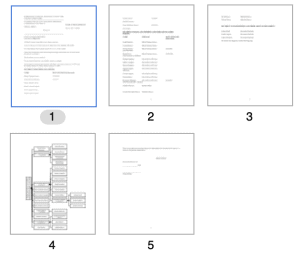
An affidavit of heirship is an affidavit executed by a disinterested person familiar with the deceased person and his or her family tree. The purpose of the affidavit is to who the court who are the heirs of the deceased.
Under NYCRR 207.16, an affidavit of heirship is required in New York petitions for probate or administration when the decedent was survived by no distributee, one distributee or where the relationship of the distributees to the decedent is grandparents, aunts, uncles, or first cousins.
This affidavit of heirship should not be confused with the small estate affidavit required under SCPA 1310.
As previously discussed, the affidavit of heirship is an affidavit executed by a disinterested person, which should include a family tree unless the distributee is the spouse or only child of the decedent. The affidavit of heirship must include how long the disinterested person knows the decedent and is familiar with his family, the disinterested person’s relationship to the decedent, who the decedent’s distributees are, and a statement that there are no other persons of the same or nearer degree of relationship who survived decedent. This affidavit is executed under penalty of perjury.
The affidavit is not conclusive evidence of the identities of the heirs. It may be rebutted. An heir omitted in an affidavit of heirship may contest or dispute the affidavit by filing a correction affidavit in the same probate proceeding together with evidence to establish his relationship with the decedent (such as a birth certificate).
Section 207.16 states as follows:(b) Whenever, in a petition for probate or administration, a party upon whom the service of process is required is a distributee whose relationship to decedent is derived through another person who is deceased, the petition must either:
(1) show the relationship of the distributee to decedent and the name and relationship of each person through whom such distributee claims to be related to decedent; or
(2) have annexed a family tree table or diagram showing the name, relationship and date of death of each person through whom such distributee claims to be related to the decedent, which table or diagram shall be supported by an affidavit of a person having knowledge of the contents thereof.
(c) If the petitioner alleges that the decedent was survived by no distributee or only one distributee, or where the relationship of distributees to the decedent is grandparents, aunts, uncles, first cousins or first cousins once removed, proof must be submitted to establish:
(1) how each such distributee is related to the decedent; and
(2) that no other persons of the same or a nearer degree of relationship survived the decedent.
Unless otherwise allowed by the court, the proof submitted pursuant to this subdivision must be by an affidavit or testimony of a disinterested person. Unless otherwise allowed by the court, if only one distributee survived the decedent, proof may not be given by the spouse or children of the distributee. The proof shall include as an exhibit a family tree, table or diagram, except no such table or diagram shall be required if the distributee is the spouse or only child of the decedent.
When drafting an affidavit of heirship, it is best to consult with an estate lawyer with expertise on the subject matter to ensure that no mistakes are made. Should you need to draft an affidavit of heirship, we, at the Law Offices of Albert Goodwin, are here for you. We have offices in New York City, Brooklyn, NY and Queens, NY. You can call us at 212-233-1233 or send us an email at [email protected].
When the Affidavit Is Required
The affidavit of heirship is not required in every estate proceeding. It is specifically required when:
- The decedent was survived by no distributees (no spouse, no children, no parents, no siblings, no nieces or nephews, no other close relatives).
- The decedent was survived by only one distributee.
- The distributees are grandparents of the decedent.
- The distributees are aunts and uncles of the decedent.
- The distributees are first cousins of the decedent.
- The distributees are first cousins once removed.
For more distant relationships, the affidavit becomes more important because the family tree analysis is more complex and the risk of overlooking closer relatives is higher.
Who Qualifies as a "Disinterested Person"
The affiant must be a "disinterested person" — someone with no financial stake in the estate's outcome. This typically excludes:
- Distributees of the estate.
- Beneficiaries under any will.
- Spouses or children of distributees or beneficiaries.
- Creditors of the estate.
- Persons in any other position where the affidavit's contents could affect their interest.
Acceptable affiants typically include:
- Long-time friends of the decedent who are not family.
- Non-relative neighbors who knew the decedent for many years.
- Members of the decedent's religious community.
- Former co-workers with long acquaintance.
- Family members by marriage who are not direct heirs (in-laws of distant relatives, for example).
The affiant must also have actual knowledge of the family. Hearsay or general impressions are not enough; the affiant should have personal interactions with the family members being identified.
Building the Family Tree
The family tree must trace the decedent's ancestry back to the common ancestor whose descendants include all the claimed distributees. For first cousin cases, this means going back to the decedent's grandparents and tracing all their descendants. For more distant relationships, the tree goes back further.
The tree should:
- Identify each person by full name (including maiden names for women).
- Show dates of birth and death where known.
- Show marriages, divorces, and remarriages.
- Show children of each marriage, including any adopted or non-marital children.
- Identify which family members are still living and which have died.
- For deceased family members, identify whether they had surviving descendants.
Visual diagrams supplement the written description and make the relationships clearer for the court.
The "No Others" Requirement
One of the most important parts of the affidavit is the statement that no other persons of the same or closer degree of relationship survived the decedent. This requirement is meant to ensure that no closer relative is being overlooked.
The affiant should be able to explain how they know there are no others. Acceptable explanations include:
- The affiant has been personally close to the family for many decades and is familiar with all the branches.
- The affiant has reviewed family records, photographs, and other documentation.
- The affiant has consulted with other family members to confirm the family tree.
- The affiant has checked obituaries, cemetery records, and other public sources.
Vague statements that no others "are known to" the affiant are weaker than specific descriptions of the investigation conducted.
Supporting Documentation
The affidavit is strongest when supported by documentary evidence:
- Birth certificates establishing parent-child relationships.
- Marriage certificates showing spousal relationships.
- Death certificates documenting the death of intermediate family members.
- Census records showing household compositions.
- Naturalization records for immigrant ancestors.
- Newspaper obituaries listing surviving family.
- Family bibles or other historical records.
For families with substantial gaps in records (immigrants, families separated by wars, etc.), professional genealogical research may be needed to assemble the supporting documentation.
The Court's Review
The Surrogate's Court reviews the affidavit critically, particularly for more distant relationships. The court may:
- Accept the affidavit and supporting documentation without further proof.
- Appoint a guardian ad litem to investigate further.
- Require additional documentation or supplementary affidavits.
- Schedule a kinship hearing for live testimony.
- Direct genealogical research by a professional firm.
The level of scrutiny depends on the size of the estate, the distance of the claimed relationship, and the apparent completeness of the affidavit. A well-prepared affidavit often clears review without additional steps.
Consequences of an Incorrect Affidavit
Filing an affidavit under penalty of perjury is a serious matter. An affidavit that turns out to be wrong can produce significant consequences:
- The estate's distribution may be overturned if a closer relative surfaces later.
- The affiant may face perjury charges for false statements.
- The affiant may be liable for damages caused by reliance on the false affidavit.
- The administrator may face surcharge if they made distributions based on the affidavit and the distributions turned out to be wrong.
For these reasons, the affidavit should be prepared carefully with thorough investigation backing the statements made.

About the Author
Albert Goodwin Esq. is a licensed New York attorney with over 18 years of courtroom experience. His extensive knowledge and expertise make him well-qualified to write authoritative articles on a wide range of legal topics. He can be reached at 212-233-1233 or [email protected].