







Mr. Goodwin is everything you want in an attorney: professional, honest, thorough, and genuinely caring. He always explains things clearly, so I understood exactly what was happening and what to expect next. His attention to detail and persistence really stood out. Looking back, I feel lucky to have found him. He guided me through the whole process expertly, and I deeply appreciate all his hard work. Would definitely recommend him to anyone needing legal help.
Call Today:
212-233-1233
How Do I Become a Legal Guardian for My Sibling in New York?
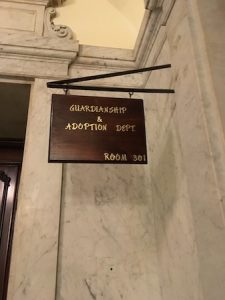
If your brother or sister can no longer safely manage their personal care or finances, you may be able to ask a New York court to appoint you as their guardian. In New York, guardianship of an adult is governed by Article 81 of the Mental Hygiene Law (MHL). This page explains the actual procedure for a sibling petitioner — who can file, in which court, the documents involved, the role of the court evaluator, the hearing, the legal standard, realistic timelines and costs, and the issues that come up specifically when a sibling (rather than a spouse or child) seeks to serve.
Note: This page covers adult guardianship under MHL Article 81. Guardianship of a person with an intellectual or developmental disability that began before adulthood is handled under a separate statute (SCPA Article 17-A) in Surrogate's Court. If your sibling has a lifelong developmental disability, that may be the more appropriate track.
Can a Sibling Petition to Be a Guardian in New York?
Yes. Under MHL § 81.06, a wide range of people may file a guardianship petition, including "a presumptively distributee of the person" — which includes a sibling when there is no closer heir, and in any case a sibling who is a person otherwise concerned with the welfare of the alleged incapacitated person (the "AIP"). A sibling clearly has standing to file.
Standing to file is not the same as priority to serve. Unlike intestate succession, Article 81 does not set a rigid order of who must be appointed guardian. Instead, the court appoints whoever it finds is in the AIP's best interest and is willing and able to serve (MHL § 81.19). The court weighs the AIP's own preferences, the relationship and history between the AIP and the proposed guardian, any conflicts of interest, and the proposed guardian's ability to manage the duties. A devoted, capable sibling can absolutely be appointed even when a spouse or adult child exists, particularly where the closer relative is unavailable, unsuitable, or is the very person the petition seeks to protect the AIP from.
Which Court Hears the Case and Where to File
Article 81 guardianship petitions are filed in the Supreme Court of the county where the alleged incapacitated person resides (or, in some counties, a dedicated guardianship part). This is different from probate and estate-administration matters, which go to Surrogate's Court. So if your sibling lives in Manhattan you would file in New York County Supreme Court; in Brooklyn, Kings County Supreme Court; and so on through Queens, the Bronx, Staten Island, Nassau, Suffolk, and Westchester. File in the county of your sibling's actual residence — not yours.
Step-by-Step: The Article 81 Process for a Sibling
- Prepare the Verified Petition and Order to Show Cause. Article 81 cases are commenced by Order to Show Cause and a detailed Verified Petition (MHL § 81.07–81.08). The petition must describe specific incidents and functional limitations — not just a diagnosis — and identify the particular powers you are asking the court to grant. It must also list interested parties who are entitled to notice.
- File and pay the fee, and obtain the judge's signature. A Supreme Court index number must be purchased (currently $210 statewide). The proposed Order to Show Cause is presented to the assigned justice, who sets the hearing date and signs it. The court will also appoint a court evaluator and, where required, counsel for the AIP.
- Serve the AIP and interested parties. Your sibling must be personally served with the Order to Show Cause at least 14 days before the hearing (MHL § 81.07). Other interested persons — such as a spouse, parents, children, other adult siblings, and anyone the AIP lives with — must also receive notice. Disputes between siblings most often surface at this stage.
- The court evaluator investigates. The evaluator is an independent, court-appointed neutral who meets your sibling, reviews the situation, interviews relevant people, and files a written report and recommendation to the court (MHL § 81.09). The evaluator's report carries significant weight, including a recommendation on who should serve as guardian.
- Counsel for the AIP. If your sibling requests counsel, contests the petition, or the court otherwise deems it appropriate, the court appoints an attorney to represent your sibling's expressed wishes (MHL § 81.10). This is separate from the court evaluator.
- The hearing. The court holds a hearing — generally within 28 days of the Order to Show Cause being signed — at which the AIP has the right to be present. You present evidence; the AIP and any objecting relatives may cross-examine and present their own.
- The decision and order. If the court finds your sibling incapacitated by the required standard, it issues an order appointing a guardian and specifying exactly which powers are granted.
- Qualifying as guardian. Once appointed, you typically must complete a court-approved guardianship training course, may be required to post a bond, and must take an oath. The court then issues a Commission evidencing your authority.
- Ongoing reporting. A guardian must file an initial report (usually within 90 days) and annual reports/accountings for as long as the guardianship continues (MHL §§ 81.30–81.31), and is supervised by a court examiner.
The Legal Standard: Clear and Convincing Evidence
The court may appoint a guardian only if appointment is necessary to provide for the AIP's personal needs and/or property management, and either the AIP consents or is found incapacitated (MHL § 81.02). A finding of incapacity must be supported by clear and convincing evidence that the person is likely to suffer harm because (1) they cannot provide for personal needs and/or property management, and (2) they cannot adequately understand and appreciate the nature and consequences of that inability. The burden of proof is on you, the petitioner.
Critically, New York follows a functional approach. The court looks at what your sibling can and cannot actually do — managing the activities of daily living such as mobility, eating, dressing, money management, banking, and using transportation (MHL § 81.03(h)) — not merely a label or diagnosis. The court also gives "primary consideration" to the person's own preferences, wishes, and values (MHL § 81.02(c)). A diagnosis alone is never enough; you must connect it to concrete functional limitations and real risk of harm.
What Powers the Court Can Grant
Article 81 favors the least restrictive intervention (MHL § 81.01). The court tailors the guardian's authority to the specific needs proven, and may grant guardianship of the person (decisions about care, residence, and medical matters), the property (managing finances and assets), or both. A limited guardianship — granting only the specific powers your sibling actually needs help with — is common and is often the right ask. Powers over property can include managing bank accounts, paying bills, marshaling assets, and, with specific court authorization, pursuing accountings or recovery of money taken from your sibling.
Conditions That May Support a Petition
Reduced capacity can arise from many conditions. Rather than the diagnosis itself, what matters is how the condition affects your sibling's functional ability and creates risk of harm. Common contexts include:
- Dementia, including Alzheimer's disease, vascular dementia, frontotemporal dementia, and Parkinson's disease dementia. (See the Alzheimer's Association and the National Institute on Aging for medical information.)
- Traumatic brain injury or the cognitive effects of stroke.
- Serious mental illness — but only where it demonstrably impairs the AIP's ability to understand and manage their affairs. Mental illness alone does not establish incapacity.
- Severe physical frailty or the effects of strong medications (sedatives, antipsychotics, opioids) that impair judgment.
For medical questions, consult your sibling's physicians and authoritative sources such as the National Library of Medicine (MedlinePlus). The legal question for the court is always functional capacity and risk of harm — not the label.
Sibling-Specific Issues and Family Conflict
Guardianship cases brought by a sibling raise their own challenges:
- Objections from other relatives. Another sibling, a parent, a spouse, or an adult child may oppose your petition or seek to be appointed instead. The court resolves competing applications by determining what serves the AIP's best interest, not by a fixed family hierarchy. Documentation of your involvement and the other person's unsuitability or conflict can be decisive.
- The protective sibling. Many sibling petitions are filed precisely because another person — sometimes a relative, caretaker, or acquaintance holding a power of attorney — is exploiting the AIP. Where there is urgency, the court can appoint a temporary guardian pending the hearing (MHL § 81.23) to stabilize accounts and prevent further loss.
- Your own standing relative to a closer relative. If a spouse or child exists and is suitable and willing, the court may favor them; if they are absent, unwilling, or part of the problem, a sibling is frequently appointed.
Alternatives to Full Guardianship
Because Article 81 requires the least restrictive option, consider whether your sibling's needs can be met without a full guardianship:
- Limited guardianship — only the specific powers needed.
- Durable power of attorney and health care proxy — if your sibling still has capacity to execute them, these can avoid a court proceeding entirely.
- Supported decision-making — an arrangement in which trusted people help your sibling understand and make their own decisions.
- A special needs trust — where the concern is preserving assets and benefits for a sibling with a disability.
Realistic Timeline and Costs
Uncontested Article 81 cases often conclude within roughly two to four months from filing to the issuance of a Commission; contested cases with objecting family members, adjournments, and disputed evaluator findings can take considerably longer. Court costs include the $210 index number plus service and motion fees. The court evaluator and any court-appointed counsel are compensated, often from the AIP's assets if available, otherwise as the court directs. Attorney's fees for the petitioner vary with complexity; straightforward, uncontested petitions are at the lower end, while contested cases involving multiple objectants and accountings cost more. Ask any attorney for a clear, written fee estimate for your specific facts.
Documents and Evidence to Prepare
- Specific, dated examples of incidents showing your sibling's functional limitations and risk of harm.
- Medical records or a physician's affirmation describing diagnosis and functional impact.
- An inventory of your sibling's assets, income, debts, and recurring obligations.
- Copies of any power of attorney, health care proxy, or recent financial documents.
- Bank statements or records suggesting unexplained transfers, if financial exploitation is suspected.
- Names and addresses of all interested persons entitled to notice.
Frequently Asked Questions
Can I be guardian of my sibling if our parents or another sibling object?
Yes. The court is not bound to appoint the closest relative. It appoints whoever is in your sibling's best interest, considering the AIP's wishes, your relationship and reliability, and any conflicts of interest. An objection does not disqualify you.
Which court handles adult guardianship in New York?
Article 81 adult guardianships are filed in the Supreme Court of the county where your sibling resides — not Surrogate's Court (which handles wills and estates).
How long does it take to become my sibling's guardian?
Uncontested cases typically take about two to four months; contested cases take longer. The statute generally calls for the hearing within 28 days of the signed Order to Show Cause, after which appointment and qualification follow.
Does a diagnosis like dementia automatically prove incapacity?
No. New York uses a functional test. You must show by clear and convincing evidence that your sibling cannot manage personal needs or property and cannot appreciate the consequences — not just that a diagnosis exists.
What if someone is already taking my sibling's money through a power of attorney?
You can seek a temporary guardian to protect accounts while the case is pending, and the guardian can later pursue an accounting and recovery. Learn more about power-of-attorney abuse and breach of fiduciary duty.
Is there a less restrictive option than full guardianship?
Often, yes — a limited guardianship, a durable power of attorney and health care proxy (if your sibling still has capacity), supported decision-making, or a special needs trust may meet the need without a full guardianship.
Speak With a New York Guardianship Attorney
Article 81 proceedings involve multiple participants — the court evaluator, court-appointed counsel, the assigned justice, and any objecting relatives — along with strict notice rules, evidentiary burdens, and ongoing reporting obligations. If you are considering becoming your sibling's guardian, an experienced New York guardianship attorney can prepare the petition, present the required evidence, and address any family objections. You can request a consultation with Albert Goodwin, Esq.
Related reading: Breach of fiduciary duty · Power-of-attorney abuse · Special needs trust · Advance directives
Author: Albert Goodwin, Esq. — New York estate, guardianship, and probate attorney. This article addresses New York Mental Hygiene Law Article 81 (adult guardianship), including §§ 81.01, 81.02, 81.03, 81.06–81.10, 81.19, 81.23, and 81.30–81.31.
Last updated: June 2024. This article is for general information about New York law and is not legal advice. Statutes, fees, and court procedures change; confirm current requirements and consult a licensed attorney about your specific situation.

About the Author
Albert Goodwin Esq. is a licensed New York attorney with over 18 years of courtroom experience. His extensive knowledge and expertise make him well-qualified to write authoritative articles on a wide range of legal topics. He can be reached at 212-233-1233 or [email protected].