







Mr. Goodwin is everything you want in an attorney: professional, honest, thorough, and genuinely caring. He always explains things clearly, so I understood exactly what was happening and what to expect next. His attention to detail and persistence really stood out. Looking back, I feel lucky to have found him. He guided me through the whole process expertly, and I deeply appreciate all his hard work. Would definitely recommend him to anyone needing legal help.
Call Today:
212-233-1233
Becoming Guardian for an Incapacitated Uncle in New York (Article 81)
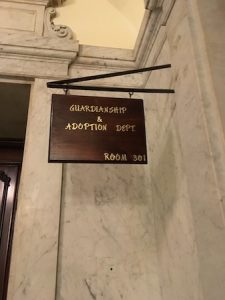
If your uncle can no longer reliably manage his own health care, living arrangements, or finances, you may be considering an Article 81 guardianship in New York. Petitioning for a relative who is not your parent or spouse raises specific questions about who has the legal right to bring the case, who the court will favor as guardian, and what evidence is required. This page explains the New York process under Article 81 of the Mental Hygiene Law (MHL) with the particular situation of a nephew or niece in mind.
This article is general legal information, not legal advice for your situation. Guardianship cases are fact-specific and the law changes. Consult a New York attorney before acting.
Why “Uncle” Status Matters: Standing and Priority
Unlike a parent of a minor, an adult uncle is presumed competent, and you have no automatic authority over his affairs simply because you are related. Two questions therefore come first.
Do you have standing to file? Under MHL § 81.06, the people who may commence a guardianship proceeding include the alleged incapacitated person (AIP) himself, a presumptive distributee (an heir who would inherit if the person died without a will), an executor or administrator of an estate of which the AIP is a beneficiary, a trustee of a trust for the AIP, the person with whom the AIP resides, a person otherwise concerned with the AIP’s welfare (including certain public agencies and facilities), and the chief executive officer of a facility in which the AIP resides. A nephew or niece is frequently a presumptive distributee, for example, where the uncle has no spouse, children, or surviving parents — and so commonly has standing. Even where you are not a distributee, you may qualify as a “person otherwise concerned with the welfare” of your uncle.
Will the court appoint you as guardian? Article 81 does not establish a rigid “next of kin” ranking the way some other statutes do. Instead, the court selects a guardian it finds suitable and in the best interests of the AIP, considering the relationship, the AIP’s own preferences if expressed, any potential conflicts of interest, and the absence of others better situated to serve. A surviving spouse or adult child is often a natural first choice, but a willing, conflict-free nephew can be appointed — especially where closer relatives are unavailable, unwilling, or are themselves the source of the problem. If family members disagree about who should serve, the matter may become contested and the court may appoint a neutral, independent guardian instead.
Consider the Alternatives First (MHL § 81.02)
New York courts are required to use the least restrictive intervention. Before granting guardianship, the court must consider whether your uncle’s needs can be met by available resources or other arrangements without taking away his decision-making rights. Realistic alternatives include:
- A durable power of attorney for financial matters, if your uncle still has capacity to sign one.
- A health care proxy for medical decisions under Article 29-C of the Public Health Law.
- Supported decision-making arrangements, where a trusted person helps without legally replacing the uncle’s authority.
- Existing trusts, representative payees for Social Security, or joint arrangements already in place.
Guardianship is appropriate where these tools are unavailable, insufficient, or are themselves being misused. If you suspect an existing power of attorney is being abused, see our related discussion of what to do when an agent abuses a power of attorney.
The Legal Standard: Incapacity by Clear and Convincing Evidence
To appoint a guardian over your uncle’s objection, the court must find incapacity by clear and convincing evidence, and the burden is on you as petitioner (MHL § 81.12). Under MHL § 81.02(b), incapacity means the person is likely to suffer harm because (1) he is unable to provide for his personal needs and/or property management, and (2) he cannot adequately understand and appreciate the nature and consequences of that inability.
The court focuses on functional ability, not a diagnosis. A diagnosis of Alzheimer’s disease, vascular dementia, Parkinson’s disease, a stroke, a brain injury, or a serious mental illness is relevant only insofar as it impairs the activities of daily living defined in MHL § 81.03(h) — mobility, eating, toileting, dressing, grooming, housekeeping, cooking, shopping, money management, banking, transportation, and similar tasks. Many people with these conditions retain capacity to make some or all decisions, so your evidence should show specific functional limitations and resulting harm, not merely a medical label.
Where and How the Case Is Filed
Article 81 guardianship proceedings are heard in the Supreme Court (and in some counties, the County Court) of the county where your uncle resides or is physically located. The case begins with:
- A verified petition describing your relationship to your uncle, the nature of his alleged incapacity, the specific powers you are asking the court to grant, his approximate assets and income, the people entitled to notice, and the available less-restrictive alternatives (MHL § 81.08).
- An order to show cause setting the hearing date and directing how and on whom notice must be served. Your uncle (the AIP) must be personally served, and notice goes to close relatives and other interested parties.
The court promptly appoints a court evaluator (MHL § 81.09), an independent investigator who meets with your uncle, reviews the situation, and reports to the court on whether guardianship is warranted and what powers are appropriate. If the AIP may be unable to afford or obtain counsel, the court may appoint an attorney, or Mental Hygiene Legal Service may become involved to protect his interests. Your uncle has the right to retain his own lawyer and to be present at the hearing.
The Hearing, Bond, and the Guardian’s Powers
At the hearing the court receives evidence — testimony, the court evaluator’s report, and medical or functional documentation. If the court finds incapacity, it tailors the guardian’s powers to the AIP’s actual limitations; it may grant guardianship of the person (health care and personal decisions), the property (finances), or both, and only the specific powers needed. Before letters issue, the appointed guardian typically must take an oath, file a designation, and, where property is involved, post a bond in an amount the court sets to protect the assets.
Being a guardian carries continuing duties. You will generally file an initial report (the 90-day report) and an annual accounting describing the AIP’s condition and the management of his funds, subject to review by a court examiner. You must also complete required guardian training. These obligations are substantial and ongoing — a guardianship is not a one-time event.
Emergency Relief When Money Is at Risk
If your uncle’s assets are being depleted, for example, by someone misusing a power of attorney — the order to show cause can request a temporary guardian under MHL § 81.23 to act immediately, and the court can issue interim relief such as freezing accounts or restraining transfers pending the hearing. A temporary guardian preserves the status quo while the full proceeding is decided. You may also seek an accounting from anyone who has been handling your uncle’s funds under a power of attorney to determine where the money has gone.
Contested Cases and Objections
Your uncle has the right to oppose the petition, and other relatives may object — either to the guardianship itself or to your appointment as guardian. A contested case may involve discovery, expert testimony on capacity, and a fuller hearing. Where family members are in conflict, courts often appoint an independent professional guardian to avoid favoring one side. Approaching the case with documented, objective evidence of functional impairment and harm, rather than family grievances, tends to be far more persuasive.
Timeline and Costs
An uncontested Article 81 proceeding often concludes within a few weeks to a few months, depending on the county’s calendar, the court evaluator’s schedule, and how quickly the guardian qualifies after the order is signed. Emergency temporary relief can sometimes be obtained within days. Costs vary widely and may include the court filing fee, court evaluator fees, attorney’s fees, the bond premium, and, in appropriate cases, fees the court may direct to be paid from the AIP’s assets. A contested case takes longer and costs more.
Related Reading
- When an agent abuses a power of attorney
- Advance directives in New York
- Breach of fiduciary duty
- Fiduciary accountings
Speak With a New York Guardianship Attorney
Petitioning for guardianship of an uncle involves careful attention to standing, the choice of guardian, the evidence of incapacity, and the least-restrictive-alternative analysis. To discuss whether an Article 81 guardianship, or a less restrictive option, fits your uncle’s situation, you can contact Albert Goodwin, Esq. at 212-233-1233 or 516-777-0647 to request a consultation.

About the Author
Albert Goodwin Esq. is a licensed New York attorney with over 18 years of courtroom experience. His extensive knowledge and experience make him well-qualified to write authoritative articles on a wide range of legal topics. He can be reached at 212-233-1233 or [email protected].