







Mr. Goodwin is everything you want in an attorney: professional, honest, thorough, and genuinely caring. He always explains things clearly, so I understood exactly what was happening and what to expect next. His attention to detail and persistence really stood out. Looking back, I feel lucky to have found him. He guided me through the whole process expertly, and I deeply appreciate all his hard work. Would definitely recommend him to anyone needing legal help.
Call Today:
212-233-1233
Issues in Probating a Copy of a Will in New York City
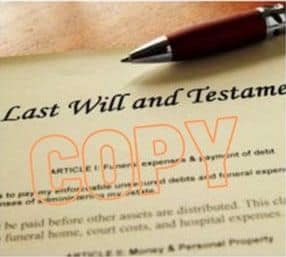
Probating a copy of a will is possible in New York, but the person offering the copy must first overcome a strong common-law presumption that the missing original was revoked.
The presumption works like this. If the person who made the will was the last person known to have it and it cannot be found among their possessions after death, the law treats the will as lost or destroyed and presumes that the testator destroyed it in order to revoke it. Matter of Estate of Gray, 143 A.D.2d 751 (1988); In re Evans, 264 A.D.2d 482 (1999). If instead the testator left the original with the attorney who drafted it for safekeeping, and it is the attorney who cannot locate it, there is no presumption of revocation at all.
The Three Requirements of SCPA § 1407
Where the original has been lost or destroyed but a copy survives, the copy may be admitted to probate under SCPA § 1407 only if the proponent establishes three things:
- that the will has not been revoked;
- that the will was executed in the manner required for the probate of an existing will; and
- that all of the provisions of the will are clearly and distinctly proved by each of at least two credible witnesses, or by a copy or draft of the will proved to be true and complete.
The second requirement is usually the easiest. A will is duly executed under EPTL § 3-2.1 if the testator signs it in front of at least two attesting witnesses, declaring that the instrument is his will, and the witnesses sign at the testator’s request within 30 days of the testator’s signing. When an attorney supervised the execution and the will contains an attestation clause, that is presumptive evidence of due execution.
The first requirement is straightforward when the testator never kept the original but left it with the attorney. If the attorney lost it, no presumption of revocation arises from its absence at death. Even where the testator did keep the original, the presumption is overcome if the will is shown to have been destroyed by a force of nature. In Matter of Certoma, Jr., 55 Misc.3d 908 (2017), a will destroyed during Hurricane Sandy was admitted to probate from a copy.
The third requirement is usually met by affidavits of the attesting witnesses stating that the copy offered for probate is a true and complete representation of the original. Matter of Certoma, supra. The statute allows either route: two witnesses who can testify to the will’s contents from personal knowledge (typically the attesting witnesses), or a copy proved true and complete through attestation, affidavit or testimony. Where both are available, proponents often use both.
Why a Copy Alone Is Not Enough
Producing a clean photocopy does not end the inquiry. Under SCPA § 1407 the copy satisfies only the third requirement, proof of contents. The proponent must still independently overcome the presumption of revocation and prove due execution. Where the original was last in the testator’s hands and is simply missing, even a perfect photocopy may be rejected if the presumption cannot be overcome. That is the most common reason lost-will petitions fail in New York.
The quality of the copy also matters. A complete photocopy showing every execution area filled in, meaning the testator’s signature, both witnesses’ signatures and the notary’s seal, is the strongest proof of contents. If a copy of the self-proving affidavit under SCPA § 1406 survives, it can establish due execution on its own. A bare draft or an unsigned word-processing file is far weaker: it may show only that a will was prepared, not that it was executed in that form.
Overcoming the Presumption of Revocation
Rebutting the presumption is the central challenge in a lost-will probate. Successful proponents typically rely on one or more of the following kinds of proof.
| Approach | What the evidence shows |
|---|---|
| The testator did not have possession | The original was kept with the attorney, in a safe deposit box or with another third party, so the testator was not the last person known to have it and the presumption never arises. |
| Conduct inconsistent with revocation | The testator continued to refer to the will, told family members it existed, or otherwise treated it as still in effect. |
| Destruction by another cause | Fire, flood, theft or similar events that explain the disappearance without any act of the testator. |
| Revocation would contradict expressed wishes | The lost will reflected the testator’s clear and consistent intent, making revocation implausible. |
| The original turns up | Wills thought to be lost are sometimes only misplaced and are found by a thorough investigation. |
| Multiple copies exist | Where several copies were made, the survival of one makes deliberate destruction of all of them less likely. |
The disaster principle from Certoma extends beyond hurricanes. Wills destroyed by a fire at the testator’s residence, lost during a move along with other papers, lost when a safe deposit box was destroyed, or destroyed through the neglect of caretakers or family members rather than by the testator all share the same feature: the destruction was not the testator’s own act done with intent to revoke. Establishing that non-testator cause overcomes the presumption.
Where the Evidence Comes From
The attorney who drafted the will is typically the best source of proof. The attorney’s file usually contains a copy of the will and notes documenting the execution; billing records can corroborate the timing; correspondence may show the testator’s continued reliance on the will; and the attorney, having supervised the signing, can testify to the formalities. When a will is lost, the first call should be to the drafting attorney, if known, with a request for the complete file. Attorneys typically retain files for at least seven years and often much longer.
The attesting witnesses, the two people who signed at the execution, can testify to the fact of the ceremony, the testator’s apparent capacity and freedom from duress, the formalities of publication, signature and attestation, and the substance of the will’s terms if they read it or had it read to them. Locating them years later can be hard. Some courts accept alternative evidence, such as deposition transcripts or affidavits, when a witness is unavailable because of death or disability.
The Search Requirement
Before filing a lost-will petition, the proponent must conduct a thorough search for the original and describe those efforts in detail in the petition; a perfunctory search will not satisfy the Surrogate’s Court. A reasonable search covers the testator’s home (safes, file cabinets, desk drawers and other likely storage spots), the drafting attorney’s office, any safe deposit boxes the testator rented, storage units and other off-premises storage, the Surrogate’s Court itself, where a testator may have deposited the will during life under SCPA § 2507, and friends and family members who may have been entrusted with the document.
The typical lost-will fact patterns each present their own proof problems and each bears on whether the presumption applies: the drafting attorney retained the original but has since died or retired and the firm no longer has the file; the testator stored the will at home and the home was damaged by fire or flood; the testator moved repeatedly and the will went astray during a move; the will simply cannot be located despite a diligent search; the family member who knew where it was stored died without telling the executor; or the testator entered a nursing home and personal property went to storage, where the will was lost.
Objections to Probate of a Copy
If the court denies probate to the copy, the estate passes under New York’s intestacy statute, EPTL § 4-1.1. The people who would inherit in that event, the distributees or heirs-at-law, are the ones who usually object, and they do so when they stand to take more by intestacy than under the will. The common objections are that the will was revoked, as its disappearance presumes; that the copy is not authentic; that the original was modified before it was lost; that the witnesses’ recollections are unreliable after so many years; that the drafting attorney’s file is incomplete or unreliable; or that the testator made a later will revoking the lost one. Each objection calls for specific evidence, and the proponent must answer every objection that is raised.
The consequences of failure are often severe. Intestacy sends the estate to the statutory heirs rather than the will’s beneficiaries; specific bequests to friends, charities and non-relatives are lost; the executor is chosen by statutory priority rather than the will’s nomination; any trusts the will would have created never come into being; and guardian nominations for minor children fall away. Because those outcomes can differ so sharply from what the testator intended, the cost of a contested lost-will proceeding is usually justified for a substantial estate.
Preventing the Problem: Where to Keep the Original
The lost-will problem is avoidable with sensible storage.
| Storage option | Advantages and cautions |
|---|---|
| Attorney’s office | Many attorneys retain client wills in their vault. This protects against loss at home and gives a clear chain of custody. |
| Bank safe deposit box | Physically secure, but the family must know the box exists and be able to get access after death. |
| Home fireproof safe | Acceptable if the safe is truly fireproof and family members know the combination. |
| Filing with the Surrogate’s Court | New York allows a will to be filed with the court during the testator’s lifetime for a fee. This is the most secure option. |
| Multiple originals | Some practitioners execute more than one original, keeping one at the office and giving one to the testator. |
Whatever the choice, the executor should be told where the original is. A will hidden so well that no one can find it causes exactly the same problems as a will that is genuinely lost.
Talk to Us
Whether you hold a copy of a will you need to offer for probate, or you are a distributee who intends to object to a copy being admitted, we can help. Call 212-233-1233 or write to [email protected]. For the statutory rules in depth, see our SCPA 1407 lost will guide.
References: SCPA § 1407; EPTL § 3-2.1; EPTL § 4-1.1.

About the Author
Albert Goodwin Esq. is a licensed New York attorney with over 18 years of courtroom experience. His extensive knowledge and experience make him well-qualified to write authoritative articles on a wide range of legal topics. He can be reached at 212-233-1233 or [email protected].