
Albert Goodwin is a Brooklyn estate lawyer who handles probate, estate administration, will contests and estate accountings in the Kings County Surrogate's Court. He has practiced in New York since 2008. The practice now covers all five boroughs, but a large share of the work is still Brooklyn estates, and most of those estates have a house, a brownstone or a co-op at the center of them.
Our Brooklyn office is at 300 Cadman Plaza West, 12th Floor, Brooklyn, NY 11201, a short walk from the Surrogate's Court at 2 Johnson Street. Call 212-233-1233 or email [email protected].
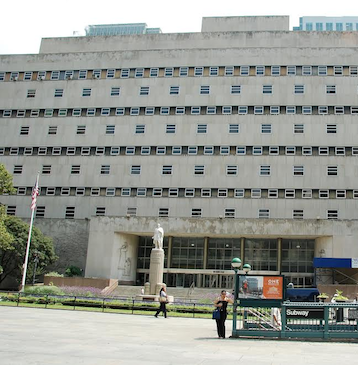
This page covers how estate matters move through the Kings County Surrogate's Court, where to go for the records you will need, and the real estate problems that come up again and again in Brooklyn estates. For the estate planning documents themselves, see our estate planning page. For a step-by-step view of the probate process citywide, see a sample NYC probate timeline.
Kings County Surrogate's Court: Where It Is and How It Works
The Surrogate's Court for Kings County sits at 2 Johnson Street, Brooklyn, NY 11201, between Adams Street and Cadman Plaza East, next to Borough Hall. It has jurisdiction over the estates of people who were domiciled in Brooklyn when they died, and over Brooklyn real property left by non-residents (through ancillary proceedings). The court has two elected Surrogates. Matters are assigned by department (probate, administration, accounting, miscellaneous) and by Surrogate, and the court's calendar pages list current assignments.
Points of local practice that matter in Brooklyn:
- E-filing: Kings County Surrogate's Court accepts filings through the New York State Courts Electronic Filing system (NYSCEF). Attorneys file most probate and administration petitions electronically. Self-represented parties may file on paper and may opt out of e-filing under the court's rules.
- Original documents: An original will must be delivered to the court even when the petition is e-filed. The court also requires the death certificate. Photocopies do not substitute for either.
- Citation return dates: If a necessary party under SCPA 1403 will not sign a waiver and consent, the court issues a citation with a return date. Service must follow SCPA 1411 (personal delivery within the state, or by mail or publication where the court authorizes it). On the return date, the party either appears, defaults or asks for time to file objections. Defaults are noted and the matter proceeds without that party.
- Volume: Brooklyn is the most populous county in New York State, and the court handles a correspondingly heavy volume of uncontested probate and administration filings. Processing time depends on the completeness of the papers. Petitions returned for correction are the most common cause of delay.
- Record room: Older Brooklyn estate files are available through the record room at 2 Johnson Street. Older files are often needed to clear title when a deed is still in a long-deceased owner's name.
Records You Will Need, and Where to Get Them in Brooklyn
- Death certificates: Certified copies for a death in New York City are issued by the NYC Department of Health and Mental Hygiene, Office of Vital Records, 125 Worth Street, Manhattan. Most families order them through the funeral home at the time of the funeral or online from the Health Department. Order more copies than you think you need. Banks, brokerages, insurers, the co-op's managing agent and the court each require one.
- Deeds and mortgages: Brooklyn deeds are recorded with the Office of the City Register, Kings County, 210 Joralemon Street, and are searchable online through ACRIS. Check ACRIS early in every Brooklyn estate. It shows who holds title, whether a mortgage or lien is open, and whether a deed was recorded that the family did not know about.
- Property taxes and exemptions: The NYC Department of Finance keeps the tax account for each Brooklyn lot. A STAR, senior citizen or veteran exemption held by the decedent does not pass to the heirs, and the Department of Finance will remove it once it learns of the death.
- Buildings records: Open Department of Buildings and HPD violations attach to the property, not the owner. Check the DOB and HPD portals before listing or distributing a house.
Probate of a Will in Brooklyn
Probate is the proceeding that proves a will was validly executed under EPTL 3-2.1 and results in letters testamentary for the named executor. The petition is filed under SCPA 1402 in the county where the decedent was domiciled. In a Brooklyn probate, the executor or the attorney assembles the original will, the death certificate, the petition, an affidavit from the attesting witnesses if the will does not already contain one, and either signed waivers from every distributee or a citation for those who will not sign.
If every distributee signs a waiver and consent and the papers are complete, letters can issue without a court appearance. If a citation is required, the return date adds weeks to the schedule, and any party who appears has the right to examine the attesting witnesses and the drafting attorney under SCPA 1404 before deciding whether to object. Where the estate needs someone with authority right away, for example to secure a vacant brownstone or to respond to a tenant, the court can issue preliminary letters under SCPA 1412.
Once letters issue, the executor collects assets, pays debts and expenses, sells or distributes the real estate, and accounts to the beneficiaries. Our pages on letters testamentary and estate accountings describe those stages.
Administration When There Is No Will
When a Brooklyn resident dies without a will, the estate passes under EPTL 4-1.1. A surviving spouse with children takes the first $50,000 plus half of the balance, and the children share the rest. If there is no spouse, the children take everything. Priority for appointment as administrator follows SCPA 1001, starting with the spouse and children. Letters of administration are issued on a petition under SCPA 1002, with the same waiver-or-citation requirement as probate.
Two Brooklyn-specific points. First, if no distributee is eligible or willing to serve, or if the distributees cannot be found, the court may appoint the Public Administrator of Kings County under SCPA Article 11. The Public Administrator's office is at 360 Adams Street, Brooklyn. Once the Public Administrator is appointed, family members who later come forward must establish their relationship to the decedent, often in a kinship hearing, before they receive anything. Our kinship page explains how those hearings work and how SCPA 2225 handles distributees who cannot be located.
Second, a Brooklyn estate that consists only of personal property worth $50,000 or less can use the voluntary administration procedure under SCPA 1301. That procedure does not cover real property. If the decedent owned a house, even a house with a small equity, a full administration proceeding is required. See letters of administration for the filing requirements.
Estate Litigation in Kings County
We represent objectants and proponents. The contested matters that come through the Brooklyn Surrogate's Court tend to fall into recognizable patterns:
- Will contests: Objections under SCPA 1410 on grounds of lack of testamentary capacity, undue influence, fraud or defective execution. In Brooklyn these often involve an elderly homeowner who signed a new will late in life leaving the house to one child, a caregiver or a new acquaintance. Discovery includes the SCPA 1404 examinations and, in most cases, the decedent's medical records. See will contests.
- Discovery and turnover proceedings: Under SCPA 2103, a fiduciary can compel someone holding estate property to turn it over. The common Brooklyn version is a deed signed shortly before death transferring a house to one relative, or a bank account converted to joint ownership. See discovery and turnover proceedings.
- Compulsory accountings: Under SCPA 2205, a beneficiary can force an executor or administrator to account. Objections to the accounting can lead to surcharge if the fiduciary mismanaged the property, for example by letting a multi-family building fall into disrepair or collecting rent without reporting it.
- Removal: Under SCPA 711 and 719, the court can suspend or remove a fiduciary who is unfit or has misappropriated assets.
- Occupancy disputes: A sibling or other relative living in the estate's house and refusing to leave or pay rent. These are handled through the Surrogate's Court, through a holdover proceeding in Kings County Civil Court, or both. See when a sibling refuses to leave the parents' house and a beneficiary living in the inherited house.
Brooklyn Real Estate Inside the Estate
In most Brooklyn estates the house is the estate. A brownstone bought in Bedford-Stuyvesant or Crown Heights in the 1970s for a five-figure price may now be worth several million dollars, and the decedent may have had little else. That single fact drives the planning, the administration and the disputes. The table below summarizes the property types we see most and the problem each one brings.
| Property type and neighborhoods | What it does to the estate |
|---|---|
| Brownstones and row houses (Bed-Stuy, Crown Heights, Park Slope, Fort Greene, Clinton Hill, Prospect Lefferts Gardens) | Often two- to four-family buildings with tenants, a reverse mortgage or home equity line, and a deed that may still name a parent or grandparent. Capital gains exposure is high, and the step-up in basis under IRC 1014 is the single largest tax benefit in the estate. Selling versus one heir buying out the others is the usual decision point. |
| Multi-family buildings with rent-stabilized tenants (Flatbush, Sunset Park, Bushwick, Crown Heights) | Since the Housing Stability and Tenant Protection Act of 2019, an owner may recover only one stabilized unit for personal use and must show immediate and compelling necessity. Vacancy no longer deregulates a unit. A buyer prices this in, and an heir who hoped to move into the building may find that the law does not permit it. Rent registration and lease records must be located and continued by the fiduciary. |
| Co-op apartments, including Mitchell-Lama and former Mitchell-Lama buildings (Coney Island, Brighton Beach, Williamsburg, Downtown Brooklyn, Bay Ridge) | Shares and the proprietary lease pass through the estate, but occupancy requires board approval. In Mitchell-Lama co-ops, succession is limited to family members who lived in the apartment and meet income rules, and resale is at a restricted price, so a bequest of the apartment may be worth far less than the market value of a comparable unit. Maintenance must be kept current throughout. |
| Heirs' property and tangled title (East New York, Brownsville, Canarsie, East Flatbush) | Title is still in the name of someone who died years or decades ago, and several generations of heirs each hold a fractional interest without a deed. Clearing title means opening one or more estates in sequence, sometimes with an affidavit of heirship, before anything can be sold or refinanced. These neighborhoods have also seen deed theft, so ACRIS should be checked for recorded transfers the family did not authorize. |
| Houses held in two names (across Brooklyn) | A deed to the decedent and one child as joint tenants with right of survivorship passes outside the estate, regardless of what the will says. A deed as tenants in common does not. Reading the deed language is the first step. See a house in two names. |
Partition Among Siblings
When several siblings inherit a Brooklyn house and cannot agree, any co-owner may bring a partition action in Kings County Supreme Court under RPAPL Article 9. Because inherited property is almost always heirs' property as defined in RPAPL 993 (the Uniform Partition of Heirs Property Act), the court must first obtain an appraisal and give the other co-owners the chance to buy out the share of the sibling who wants to sell, at the appraised value, before ordering a sale. If no one buys out, the court favors a sale on the open market over an auction. A negotiated buyout is usually faster and cheaper than the court process. See partition of real property and buying out a co-owner of an inherited residence.
Tasks Before a Brooklyn House Can Be Transferred or Sold
| Task | What has to happen |
|---|---|
| Letters | No one can sign a deed for the estate until the court issues letters testamentary or letters of administration. Title companies will not insure a sale without them. |
| Title search | A full search through the Kings County City Register, including prior estates in the chain, open mortgages, ECB and water liens, and any lis pendens. |
| Mortgage or reverse mortgage | A reverse mortgage becomes due on the borrower's death, usually within six months with extensions available. The fiduciary must contact the servicer promptly to avoid foreclosure. |
| Tenants | Identify every tenant, the regulatory status of each unit, current rents and security deposits. Rent-stabilized leases continue in force against the estate and any buyer. |
| Property tax account | Update ownership with the Department of Finance, remove exemptions that ended at death, and bring arrears current before closing. |
| Violations | Clear or negotiate open DOB and HPD violations. Buyers and lenders will require it. |
| Co-op or condo | Obtain the estate's recognition by the board, pay maintenance or common charges, and submit the buyer or heir to board approval. |
| Estate tax lien | Where the estate is large enough to owe New York estate tax, a release of lien from the Department of Taxation and Finance is needed to convey the property. |
Situations We See in Brooklyn Estates
The following are composite illustrations of recurring fact patterns. They are not descriptions of specific client matters and do not predict any result.
- The late-life deed: A widowed homeowner in Crown Heights with four children signs a deed six months before death transferring the brownstone to the one child who lived with her. The other children learn of it after the funeral. The questions are whether she had capacity, whether the transfer was the product of undue influence, and whether the deed can be set aside in a turnover proceeding so the house passes under the will or by intestacy.
- Three generations, no deed: A house in East New York is still titled in a grandfather who died in the 1980s. His children are also deceased. A dozen grandchildren each hold a fraction. One wants to sell; another has lived there for twenty years and paid the taxes. Clearing title requires administration proceedings for the grandfather and each deceased child, a kinship showing for the grandchildren, and either an agreement among the heirs or a partition under RPAPL 993.
- The Mitchell-Lama apartment: A will leaves a Coney Island co-op apartment to a niece in New Jersey. The co-op's rules permit succession only to a qualifying family member who lived in the unit, and resale is at a limited equity price. The estate's realistic choice is to surrender the shares for the restricted resale amount, and the niece receives that sum rather than an apartment.
- The executor who stopped collecting rent: An executor of a four-family in Flatbush lets his own son live in one unit for free, stops registering rents and does not account. A beneficiary petitions under SCPA 2205 to compel an accounting and seeks a surcharge for the lost rent.
Estate Planning for Brooklyn Homeowners
For a Brooklyn family, the planning questions are usually about the house: who will get it, whether it should be sold, how to avoid a fight among children, and how to keep the estate from being taxed. New York's estate tax exclusion is indexed each year and currently stands at roughly $7 million, with a cliff that removes the exclusion entirely once an estate exceeds it by more than five percent. A brownstone alone can put a family over that line. The federal exemption is far higher ($15 million per person in 2026), so for most Brooklyn estates the New York tax is the one to plan around. Our estate tax cliff calculator shows the effect, and our estate planning page covers wills, revocable trusts, powers of attorney and health care proxies. Where the goal is to keep a house out of probate altogether, see how to avoid probate in New York.
About Albert Goodwin
Albert Goodwin has practiced law in New York since 2008 and has handled estate matters in the Kings County Surrogate's Court throughout that time. His practice is limited to estates, trusts, probate and related real estate disputes. You can confirm any New York attorney's registration status through the New York State Unified Court System attorney search. More about his background is on the about page.
Brooklyn Probate Questions
How long does probate take in Brooklyn?
There is no fixed schedule. With an original will, a complete petition and signed waivers from every distributee, letters testamentary in Kings County commonly issue within a few months of filing. If a citation must be served, add the time to the return date plus any adjournments. If objections are filed, the matter becomes litigation and can take a year or more. The full administration of the estate, including selling a house and distributing the proceeds, usually takes longer than obtaining letters. See a sample NYC probate timeline.
Where is the Kings County Surrogate's Court?
2 Johnson Street, Brooklyn, NY 11201, next to Borough Hall in Downtown Brooklyn. The nearest subway stops are Borough Hall (2, 3, 4, 5), Jay Street-MetroTech (A, C, F, R) and Court Street (R). Our office at 300 Cadman Plaza West is a few blocks away.
Do I need a lawyer to probate a will in Brooklyn?
No. An individual executor may file on his or her own, and the court has help resources for self-represented filers. In practice, most Brooklyn estates that include real property use a lawyer, because title companies, lenders and co-op boards expect clean letters and because errors in the petition are the main cause of delay. A corporation or an estate with a contested proceeding generally must appear through counsel.
What does a Brooklyn estate lawyer cost?
New York has no statutory fee schedule for estate attorneys. Fees must be reasonable and are subject to review by the Surrogate under SCPA 2110. Many uncontested probate and administration matters are handled for a flat fee quoted after we review the will, the family tree and the assets. Contested matters are billed hourly. Legal fees are an expense of the estate, paid from estate funds before distribution. Executor commissions are separate and are set by SCPA 2307 as a percentage of the estate.
What if the decedent had no will and the family cannot agree on who should serve?
SCPA 1001 sets the order of priority. Among people with equal priority, such as several children, the court can appoint one, appoint more than one, or, if they are deadlocked and the estate is at risk, appoint the Public Administrator of Kings County. See letters of administration.
Can I get into my parent's Brooklyn apartment or house before letters issue?
A landlord or co-op will usually allow a brief supervised entry to remove perishables and locate the will, but will not release the apartment or its contents until someone has authority from the court. For a house, the person with access should secure it and not remove property beyond what is needed to preserve it. See access to an apartment after death and access to a house after death.
Contact a Brooklyn Estate Lawyer
If you are an executor, an heir, a beneficiary or a co-owner of inherited Brooklyn property, we can review the will, the deed and the family situation and tell you what the Kings County Surrogate's Court will require. Call Albert Goodwin at 212-233-1233 or email [email protected]. Our office is at 300 Cadman Plaza West, 12th Floor, Brooklyn, NY 11201.